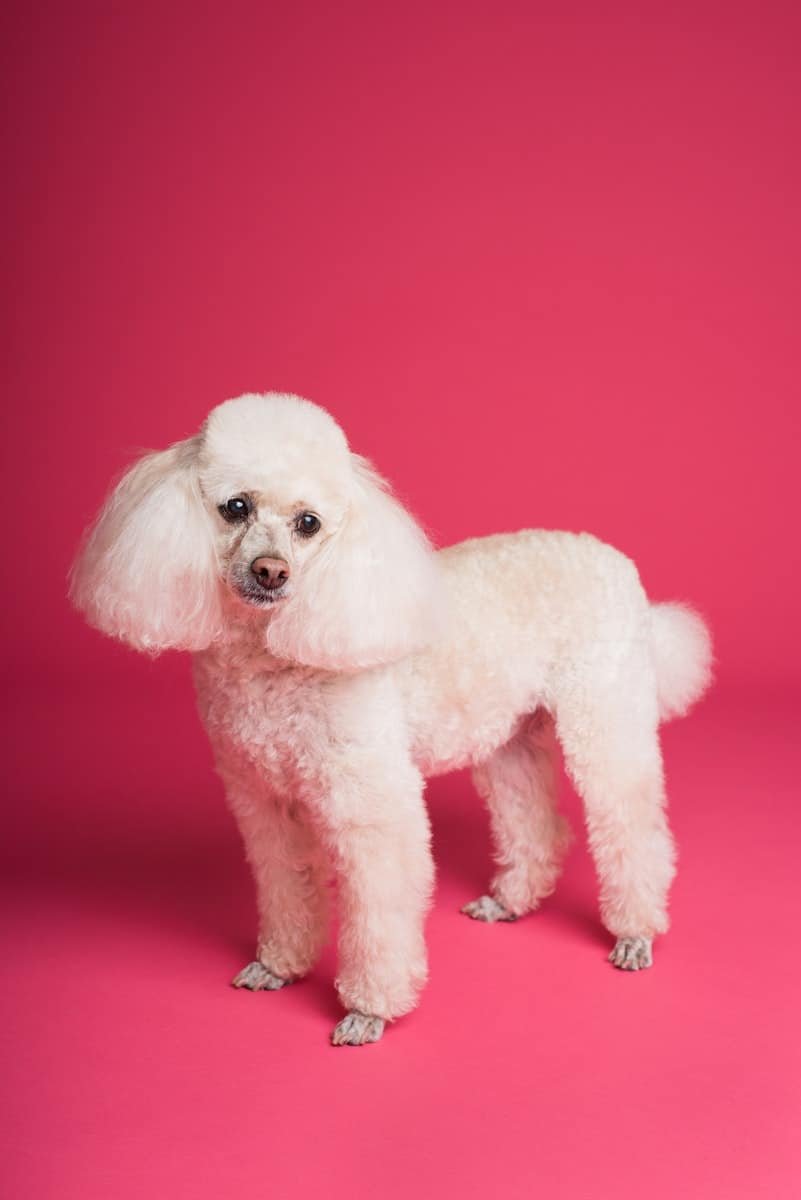
Standard Poodles are renowned for their exceptional intelligence, elegant demeanor, and devoted nature. Often misunderstood due to their fancy show cuts, these dogs are actually versatile athletes with wonderful family-oriented personalities. Understanding standard poodle temperament is key to knowing if this breed is right for your home.
Quick Facts
- Intelligence Ranking: #2 among all dog breeds
- Energy Level: High – requires daily exercise
- Trainability: Excellent – learns quickly
- Family-Friendly: Outstanding with children
- Stranger Tolerance: Reserved but friendly
Core Personality Traits
Highly Intelligent
Standard poodles rank second only to Border Collies in intelligence:
– **Quick Learners**: Master new commands in 5 repetitions or less – **Problem Solvers**: Can figure out puzzles and challenges – **Independent Thinkers**: May try to outsmart you – **Need Mental Stimulation**: Boredom leads to mischief – **Excel at Training**: Obedience, agility, tricks
This intelligence means they need owners who can provide mental challenges alongside physical exercise.
Loyal and Devoted
Standard poodles form deep bonds with their families:
– **Family-Oriented**: Wants to be involved in all activities – **Affectionate**: Loves cuddling and companionship – **Protective**: Alert watchdogs without aggression – **Velcro Dogs**: Often follows owners room to room – **Separation Anxiety Risk**: Doesn’t like being alone long
They thrive in homes where someone is present most of the day.
Active and Athletic
Despite their elegant appearance, standard poodles are true athletes:
– **High Energy**: Needs 60+ minutes daily exercise – **Natural Swimmers**: Originally bred as water retrievers – **Agile**: Excels at agility courses – **Playful**: Maintains puppy-like enthusiasm into adulthood – **Versatile**: Hiking, running, swimming partner
Couch potatoes need not apply—this breed needs active owners.
Dignified Yet Playful
Standard poodles balance elegance with fun:
– **Regal Bearing**: Carries themselves with confidence – **Sense of Humor**: Can be clownish and entertaining – **Social**: Enjoys dog parks and playdates – **Gentle**: Knows how to play appropriately with children – **Sophisticated**: Well-mannered when properly trained
With Family Members
With Children
Excellent family dogs with kids:
**Positive Traits:** – Patient and gentle with proper socialization – Playful enough for active children – Large enough to handle rough play – Protective of family children – Trainable to respect boundaries
**Considerations:** – May be too energetic for very young toddlers – Needs teaching not to jump on small children – Requires supervision during play – Best with children 6+ who understand dog respect
With Other Pets
Generally good with other animals:
**With Dogs:** – Typically friendly and social – Benefits from early socialization – May prefer dogs of similar energy – Can have same-sex dog aggression if not neutered/spayed
**With Cats:** – Can coexist peacefully – Best if raised together – May chase unfamiliar cats – Proper introductions essential
**With Small Pets:** – Hunting instinct may be triggered – Supervision required – Early exposure helps
With Strangers
Reserved but not aggressive:
– **Initial Reaction**: Watchful and assessing – **After Introduction**: Usually friendly – **Protective Nature**: Will bark to alert – **Not Guard Dogs**: Too friendly after meeting – **Socialization Important**: Prevents excessive shyness
Behavioral Characteristics
Barking Tendencies
Moderate to high barking:
– **Alert Barking**: Will announce visitors – **Attention-Seeking**: May bark when bored – **Communicative**: Uses different barks for different needs – **Trainable**: Can learn “quiet” command – **Management**: Mental stimulation reduces barking
Separation Anxiety
Prone to attachment issues:
**Signs:** – Destructive behavior when alone – Excessive barking or whining – House soiling (despite being trained) – Pacing or restlessness before departure
**Prevention:** – Gradual alone-time training from puppyhood – Crate training for security – Mental enrichment toys – Consistent routine – Consider doggy daycare or walker
Energy Management
High energy requires outlets:
**Daily Requirements:** – 60+ minutes exercise – Mental stimulation activities – Training sessions – Interactive play – Swimming (ideal exercise)
**Without Adequate Exercise:** – Destructive chewing – Excessive barking – Hyperactivity – Difficulty focusing – Behavior problems
Training and Socialization
Trainability
Exceptionally trainable breed:
**Strengths:** – Learns commands extremely quickly – Eager to please – Food and praise motivated – Excels in obedience competitions – Can learn complex tasks
**Challenges:** – May try to outsmart handler – Can become bored with repetition – Sensitive to harsh corrections – Needs consistent leadership – May develop selective hearing if spoiled
Socialization Needs
Critical for balanced temperament:
**Puppy Stage (8-16 weeks):** – Exposure to various people – Different environments – Other dogs and animals – Sounds and situations – Positive experiences
**Ongoing:** – Regular outings – Dog parks or playgroups – Training classes – New experiences – Continued positive reinforcement
Best Training Methods
Positive reinforcement works best:
– **Reward-Based**: Treats, praise, play – **Consistency**: Same commands from all family – **Short Sessions**: Keep training fun – **Variety**: Mix up activities – **Avoid**: Harsh corrections, punishment
Common Temperament Issues
Shyness or Anxiety
Can develop with poor socialization:
**Causes:** – Lack of early socialization – Negative experiences – Genetic predisposition – Insufficient exposure
**Solutions:** – Gradual desensitization – Professional trainer help – Positive experiences – Patience and consistency
Excessive Energy
Manifests as hyperactivity:
**Signs:** – Can’t settle down – Destructive behavior – Jumping on people – Mouthing or nipping
**Solutions:** – Increase exercise – Mental enrichment – Training for impulse control – Structured routine
Stubbornness
Intelligence can mean selective listening:
**Management:** – Establish clear leadership – Consistent rules – Make training rewarding – Avoid letting them “win” – Vary training to prevent boredom
Is the Standard Poodle Temperament Right for You?
Best Suited For:
– **Active Families**: Can provide daily exercise – **Experienced Dog Owners**: Understand training needs – **Home-Based Workers**: Can be home frequently – **Outdoor Enthusiasts**: Want a companion for activities – **Committed Trainers**: Enjoy working with intelligent dogs
May Struggle With:
– **Sedentary Households**: Insufficient exercise – **Frequent Travelers**: Too much alone time – **First-Time Owners**: May be outsmarted – **Small Apartments**: Needs space for energy – **Inconsistent Owners**: Requires structure
Commitment Required:
– **Time**: 2-3 hours daily (exercise, training, grooming) – **Energy**: High-energy engagement – **Patience**: Consistent training – **Financial**: Grooming, healthcare, training – **Lifestyle**: Active, dog-inclusive activities
Frequently Asked Questions
Are standard poodles good family dogs?
Yes, standard poodles are excellent family dogs. They’re intelligent, loyal, playful, and gentle with children when properly socialized and trained.
Do standard poodles have behavior problems?
Standard poodles can develop behavior problems like separation anxiety, excessive barking, or destructive behavior if they don’t receive adequate exercise, mental stimulation, and training.
Are standard poodles aggressive?
No, standard poodles are not aggressive. They’re friendly and social dogs that may be reserved with strangers initially but warm up quickly. Proper socialization is important.
How much attention do standard poodles need?
Standard poodles need significant daily attention—at least 2-3 hours including exercise, training, play, and companionship. They don’t do well being left alone for long periods.
Are standard poodles easy to train?
Yes, standard poodles are among the easiest breeds to train due to their high intelligence and eagerness to please. They learn commands quickly with positive reinforcement methods.
undefined
Understanding standard poodle temperament helps ensure a successful adoption. Browse our available standard poodles and find one whose personality matches your lifestyle.
Related reading: Standard Poodle Size: Complete Growth Chart & Weight Guide
Related reading: Toy Poodle Training: Complete Guide to Obedience & Behavior