What Is Dog Volunteering?
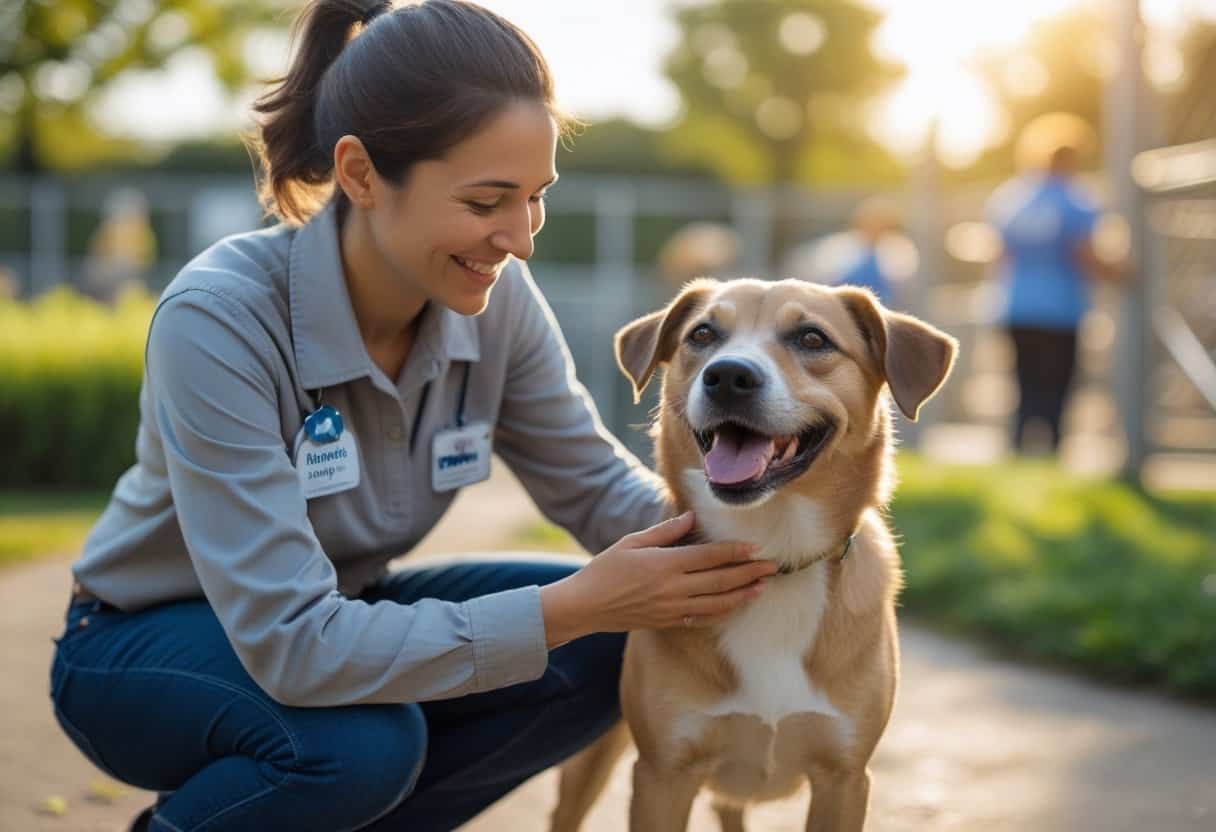
Dog volunteering gives people a chance to help dogs in need through hands-on work and service. Volunteers fill important roles at animal shelters and other organizations, offering care and positive changes for the animals.
Definition And Overview
Dog volunteering means giving your time, effort, and skills to help care for dogs without pay. Most of this happens at animal shelters, rescue centers, or community programs.
Some folks volunteer a few hours a week, while others commit to longer stretches. Programs welcome people of all ages, though some require a minimum age for safety.
The main goal? Give dogs the care and attention they need, especially those waiting for adoption. Volunteers help socialize dogs, making them more comfortable around people and giving them a better shot at finding a home.
Many groups depend on volunteers because paid staff alone can’t meet all the dogs’ needs.
Roles Of Volunteers
Dog volunteers tackle all sorts of tasks to keep shelters running.
Common duties include:
| Task | Description |
|---|---|
| Walking dogs | Exercise and relieve stress for shelter dogs |
| Feeding and watering | Making sure dogs have fresh food and clean water |
| Cleaning | Keeping kennels, bedding, and common areas tidy |
| Socialization | Spending time with dogs to improve their behavior |
| Assisting at events | Helping with adoption days and fundraising |
| Medical help | Supporting routine care under staff supervision |
Some volunteers drive dogs to vet appointments or foster them at home. With experience, they might train new arrivals or teach the public about responsible pet care.
The details of each role depend on the organization’s size and needs. You can see more about these common volunteer tasks.
Impact On Dogs’ Lives
Volunteers really do make a difference. Dogs in shelters often feel stressed, lonely, or scared.
When volunteers spend time with them, it helps build trust and comfort. Regular walks, playtime, and gentle handling lower anxiety and help dogs show off their best selves to potential adopters.
Volunteers teach basic manners, too, which makes adoption more likely. They also free up staff to focus on medical needs and adoptions.
Some organizations ask volunteers to foster dogs who need extra attention. That can be life-changing for animals struggling in a shelter.
For more about volunteering and how it helps dogs, check out volunteering with dogs.
Types Of Dog Volunteer Opportunities
Dog volunteer opportunities fit all sorts of skill levels and schedules. You can make a big impact at animal shelters, at special events, or even from home with virtual options.
Shelter Volunteering
Animal shelters and rescues count on volunteers for daily tasks. Feeding, cleaning kennels, walking dogs, and helping with socialization are common jobs.
Some shelters need help with training or intake, too. Volunteers often give comfort to homeless or abandoned animals by spending time with them.
This experience boosts a dog’s chance of adoption. Many people join shelter programs to connect with dogs and give back to their community.
Shelter volunteering usually involves orientation or basic training. Some places offer flexible schedules, while others have set hours.
Learn about more ways to get involved by reading about volunteering in animal shelters and rescue organizations.
Event Support
Dog-friendly charity runs, adoption days, and fundraising events need extra hands to run smoothly. Volunteers might help with registration, set up booths, or watch over dogs and their handlers.
Some events let you bring your own trained dog for meet-and-greet or therapy activities. Event volunteers support animal causes and get to meet fellow dog lovers.
This type of volunteering is often short-term or one-time, so it works well if you have a packed schedule. Volunteering at a community event is a good way to see how local groups use dog-friendly charity events to help animals.
Virtual Volunteering
Some dog volunteer gigs can be done from home on your computer or phone. Virtual volunteers might update websites, write social media posts, answer emails, or manage event sign-ups.
Organizations also need help with fundraising, designing flyers, or organizing online auctions. Virtual volunteering is great if you don’t have much free time or reliable transportation but still want to help.
These roles help organizations reach more people and spread the word about dogs needing help. Anyone, anywhere, can get involved.
How To Sign Up As A Dog Volunteer
Signing up as a dog volunteer usually means filling out an online application, attending an orientation, and meeting a few requirements. Knowing the steps ahead of time helps new volunteers jump in faster.
Application Process
Most organizations want you to fill out a volunteer application, either online or in person. They’ll ask for your name, contact info, and any past experience with animals.
Some shelters also ask for references or a background check to keep everyone safe. After you apply, you might get invited for an interview.
That’s your chance to talk about your interests, your schedule, and what kind of volunteer work sounds best. For example, PAWS Animal Shelter has a simple online form, and volunteers get updates about new opportunities.
Volunteer Orientation
Once your application’s accepted, most organizations invite you to an orientation. This session goes over the group’s rules, safety tips, and animal care basics.
Orientation might include a tour, dog-handling demos, and info on reporting any concerns. You’ll also learn how scheduling works and how to sign up for shifts.
Important topics like sanitation, animal behavior, and emergencies usually get covered. Groups like Canine Companions pair new volunteers with mentors who can answer questions and offer support.
You’ll need to attend orientation before starting your volunteer work.
Qualifications And Requirements
Dog volunteers need to meet a few basic qualifications. Most places require you to be at least 16 or 18, though some allow younger volunteers with a parent’s OK.
You’ll need a real interest in animal welfare, the ability to follow directions, and a commitment to regular hours. Some roles, like therapy dog work, expect extra training or certification.
Groups like Pet Partners want volunteers who interact calmly with both animals and people. Health and legal requirements might include proof of vaccinations or a background check.
Some jobs, especially training or transport, need a driver’s license or special skills. All expectations are listed up front.
Essential Duties Of Dog Volunteers
Dog volunteers play a crucial role in making sure dogs stay healthy, happy, and ready for adoption. These jobs involve daily hands-on care, emotional support, and making sure basic needs are met.
Dog Socialization
Dog volunteers help animals adjust to new places and people. By interacting gently, they build trust and ease fear in nervous or shy dogs.
They might brush, pet, or just talk calmly to each animal. Some volunteers sit in kennels or quiet areas and let dogs approach on their own terms.
Socialization is key for making rescue dogs more adoptable. Volunteers get trained to spot signs of stress, aggression, or anxiety, and they note their observations for staff.
Socialized dogs have a better shot at finding stable, loving homes.
Feeding And Cleaning
Volunteers make sure every dog has fresh water and food each day. They measure portions and watch for changes in appetite or signs of illness.
Clean bowls are used for every meal. Cleaning chores include wiping surfaces, sweeping, and removing waste.
Kennels, bedding, and play areas get cleaned to cut down on disease and keep dogs comfy. After feeding, volunteers check that all dogs eat as expected.
Detailed records track eating, bathroom habits, and health issues. Keeping things clean and organized helps protect both the dogs and the shelter.
You can learn more about daily volunteer tasks from the Humane Society of North Central Florida.
Exercise And Enrichment
Daily exercise is a must for a dog’s health and happiness. Volunteers walk dogs, play fetch in fenced yards, or lead short training games.
Regular walks reduce boredom and help keep dogs at a healthy weight. Enrichment means introducing toys, puzzles, and gentle training games.
These activities challenge dogs mentally and let them use their natural instincts. Volunteers often switch up toys and games to keep things interesting.
Physical and mental stimulation lowers stress. Dogs who get enough exercise and enrichment show more positive behaviors and catch the eye of adopters.
Providing daily exercise and enrichment really does improve life for shelter dogs. Find out more at Mighty Paw’s blog.
Fostering Dogs
Fostering dogs gives pets a safe, loving place to stay while they wait for a permanent home. It also helps rescues save more animals by freeing up shelter space.
Benefits Of Fostering
Foster homes offer a quiet, low-stress spot where dogs can relax, heal, and get used to family life. Dogs in foster care often become more social and trusting, which makes them easier to adopt out successfully.
Many shelters run out of space fast. Fostering opens up spots for rescues to take in more dogs who need help.
This directly saves lives, especially for dogs in crowded shelters at risk of euthanasia. Fostering also lets volunteers learn about a dog’s behavior, likes, and quirks.
They share this info to help find the best forever home. Foster volunteers usually find the experience rewarding, and it’s hard not to feel good about making a real difference.
How Fostering Works
Fostering starts with an application and a home check from the rescue group. Once approved, foster families get matched with a dog that fits their home, schedule, and experience.
Most rescues provide basics like food and cover vet care. Some ask fosters to bring dogs to adoption events or vet visits.
The length of foster care varies. Some dogs need just a couple weeks; others stay longer, especially if they’re sick or need more socialization.
If you’re interested in helping, reach out to groups like the Maryland SPCA or City Dogs & City Kitties Rescue to see current foster opportunities and get started.
Dog Volunteer Programs At Shelters
Volunteering at dog shelters does a lot for both dogs and people. Shelters count on volunteers for daily care, playtime, and socialization.
Local Animal Shelters
Most local animal shelters run on volunteer power. Volunteers feed, walk, clean, and do enrichment activities with the dogs.
New volunteers usually get some training in handling and safety. Some shelters offer cool options like dog walking teams, puppy socialization, or letting you help out at adoption events.
Others might need hands-on dog care, admin help, or public education support. Community involvement boosts life for the dogs, and shelters know it.
Programs like field trips give dogs a break from the shelter. Second Chance Animals, for example, has a Dog’s Day Out Program where volunteers take dogs out for adventures.
No-Kill Shelter Initiatives
No-kill shelters work hard to save as many dogs as possible and avoid unnecessary euthanasia. These places often need even more volunteers since they commit to lifetime care for every animal until adoption.
Best Friends Animal Society is a big name in no-kill efforts. They partner with over 2,500 no-kill shelters across the U.S., pushing for community support.
Volunteer roles here include dog walking, training, helping at adoption events, and fostering. No-kill shelters really depend on volunteers to keep things running.
Transporting Dogs For Safety And Adoption
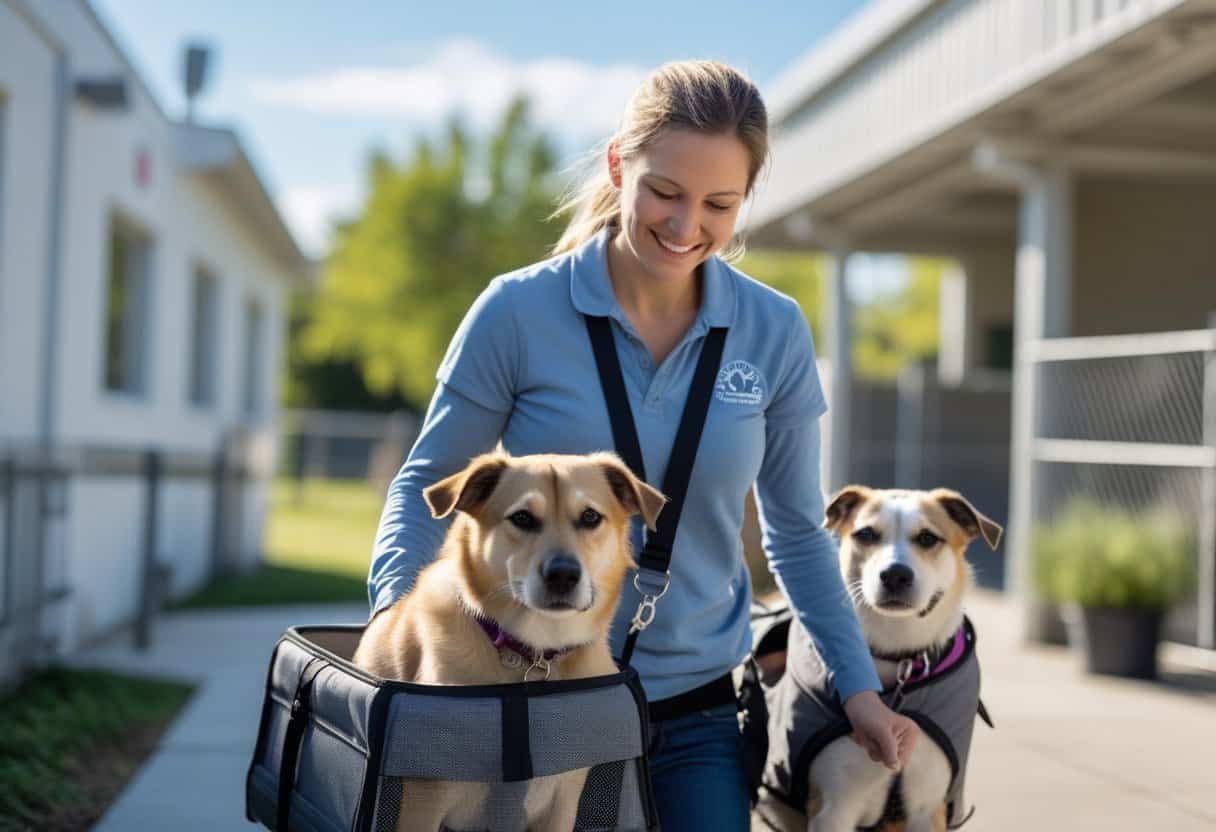
Moving dogs from risky situations to loving homes can be life-saving. Shelters with high intake or little space really need this kind of help.
Local Transportation Needs
Local shelters fill up fast with stray or abandoned dogs. Volunteers step up to drive these dogs to foster homes, adoption events, or vet appointments.
Key tasks for local dog transport volunteers include:
- Driving dogs from shelters to foster or adoptive homes
- Making sure rides are safe and comfy with crates or harnesses
- Coordinating with shelter staff or families for hand-offs
Safety matters a lot, especially since new places can stress dogs out. Some dogs need extra patience during these rides.
Shelters count on volunteers for these important trips. More help means more dogs survive and get adopted.
If you want to help, check with local animal welfare groups like the Best Friends Network.
Regional And National Rescue Efforts
Sometimes, dogs need to travel way farther—across cities or even states. Many rescue organizations run regional and national transport programs to move dogs from high-risk shelters to safer rescues or homes.
Drivers often work in relay teams, each taking a piece of the route. Some programs use caravans or “freedom rides” to move several dogs at once, especially when saving them from high euthanasia shelters.
Common reasons for long-distance dog transportation:
| Reason | Description |
|---|---|
| High Intake Shelters | Relocating dogs to rescues with more resources |
| Military Pets | Reuniting pets with families during deployments |
| Adoptive Homes | Delivering dogs to their new forever families |
Joining these networks gives dogs better chances at adoption. Volunteers often say it feels good to know their efforts matter so much.
Groups like Many Paws Volunteer Transport and Second Start Rescue are always looking for more help with dog transport.
Supporting Dog Adoption Through Volunteering
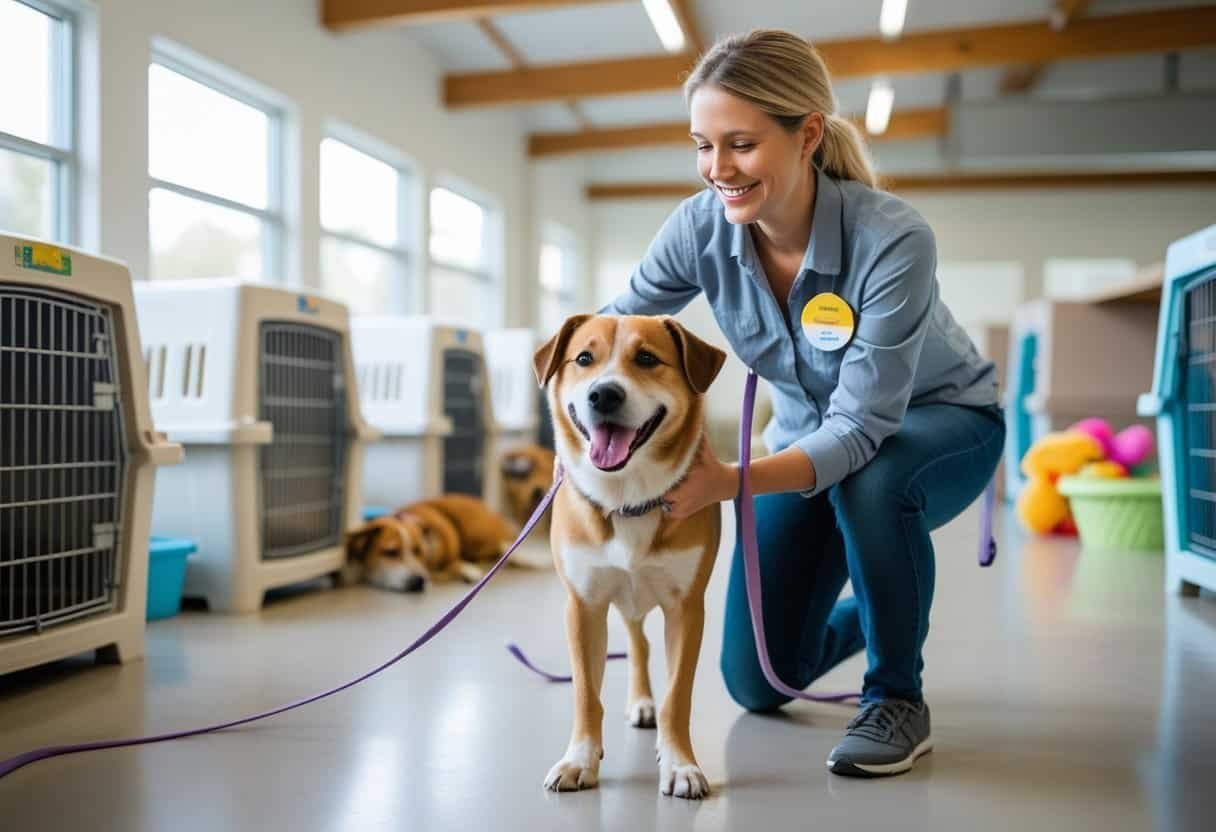
Dog volunteers make a real difference for animals looking for homes. Getting involved gives dogs a better chance at adoption and supports rescue groups every day.
Assisting At Adoption Events
Adoption events are where dogs meet their future families. Volunteers set up displays, prep the dogs, and welcome visitors.
They answer questions and share key info about each dog’s personality. Volunteers also help with paperwork and guide new owners through the adoption process.
Walking dogs, introducing them to families, or watching meet-and-greet areas are all part of the job. Volunteers help events run smoother and give dogs a shot at a great first impression.
Groups like Columbus Dog Connection and Columbus Humane really count on volunteers for these events.
Promoting Dogs Online
Posting adoptable dogs online reaches way more people. Volunteers snap good photos, write quick descriptions, and post updates on social or adoption sites.
They highlight what makes each dog unique. Sometimes they make flyers or short videos for Facebook or Instagram.
Volunteers often answer questions online and connect people with rescues. Groups like PAWS Ohio rely on this to get more dogs noticed.
Online help boosts a dog’s chances of finding a home.
Volunteering To Help Other Animals
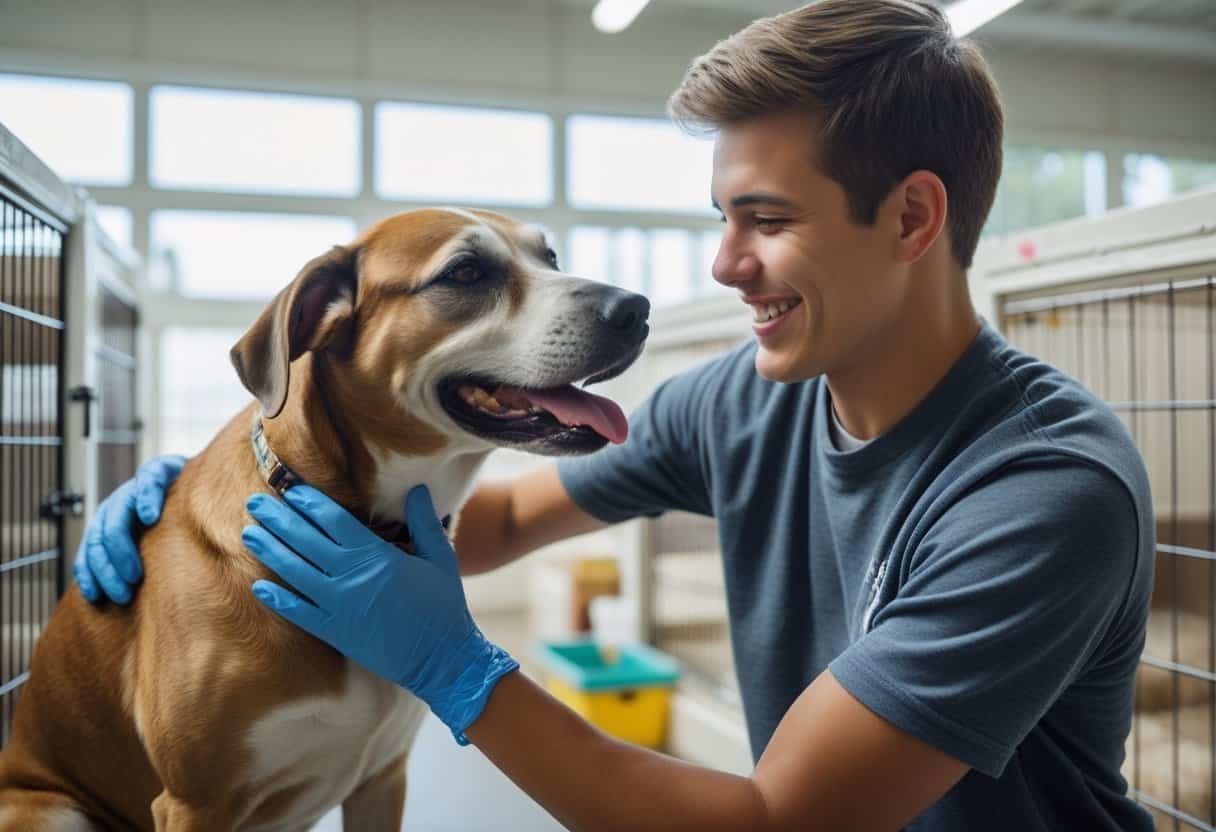
People who volunteer with dogs often pitch in for other animals too. There are lots of ways to help, from caring for cats to supporting mixed-animal rescues.
Volunteering With Cats
Cat volunteering might mean helping at a shelter, joining foster programs, or working with trap-neuter-return (TNR) teams. Shelters need help cleaning, feeding, and caring for cats waiting for homes.
Some groups train volunteers to socialize shy or scared cats, making them more adoptable. Foster programs look for people to care for kittens or adult cats temporarily.
That opens up space at the shelter and gives cats a break. Volunteers might also teach the public about cat care and responsible ownership.
TNR teams need help catching outdoor cats, getting them to clinics, and returning them. This reduces stray cat populations and helps the community.
Many rescues, like those on the Best Friends Animal Society volunteer network, welcome volunteers for these roles.
Supporting Mixed-Animal Organizations
Some rescues care for more than just dogs and cats. These groups might have rabbits, small mammals, birds, or even farm animals.
Volunteers feed, clean enclosures, or do simple health checks. Many also help with outreach or education programs in the community.
You might help at adoption fairs, assist at events, or share info about animal welfare. Sometimes, they need drivers for animal transport—moving animals to foster homes or vet visits, like at Muddy Paws Rescue.
Others help with admin work, data entry, or office support. There’s a role for nearly every interest or skill, and it all adds up to better lives for animals.
Community Benefits Of Dog Volunteering
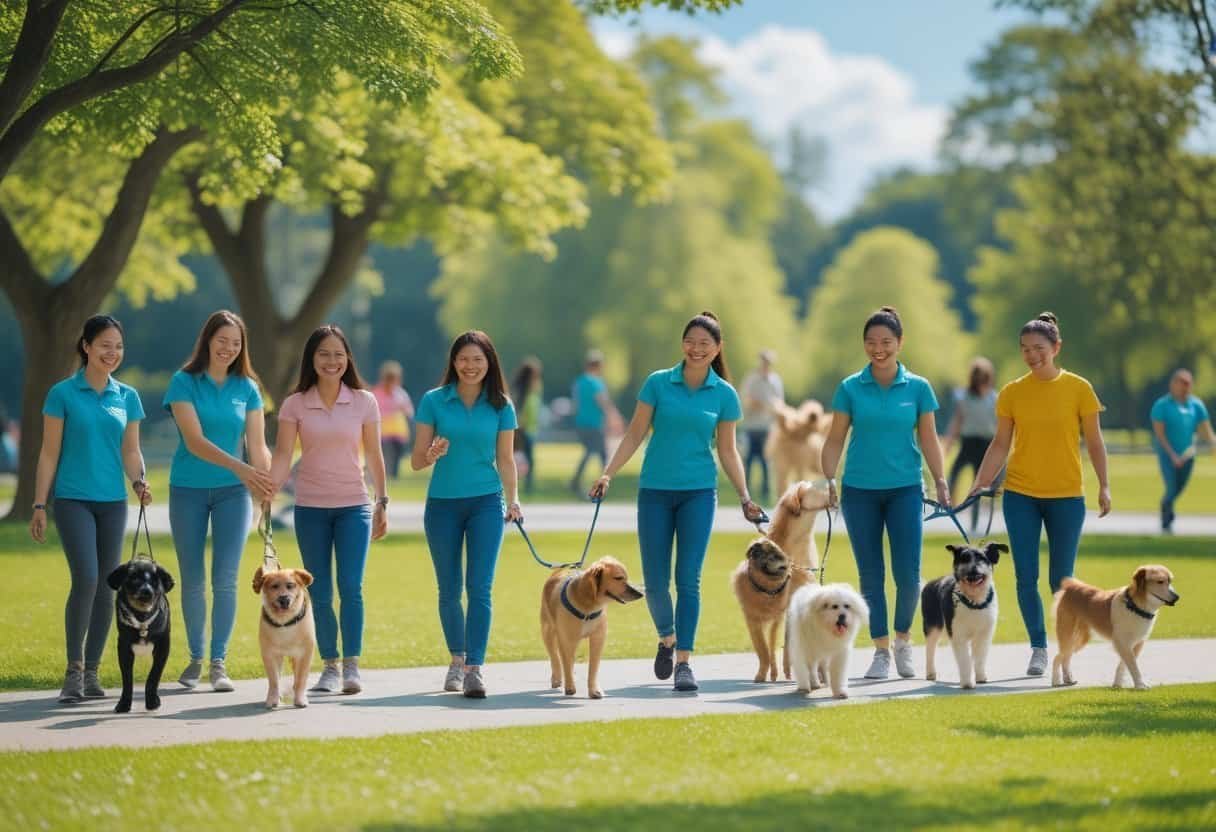
Dog volunteering isn’t just about the animals. It builds support and brings people together in ways that matter.
Strengthening Community Bonds
Dog volunteers help connect people. Events like adoption fairs or training workshops let neighbors work side by side for a shared goal.
People from all walks of life join in, breaking down barriers and making new friends. More volunteer activity means a stronger sense of belonging.
When folks unite to help shelter dogs or support rescues, they do good for animals and each other. Group dog walks and community events spark teamwork and respect.
These activities can even ease loneliness and lift spirits. Many volunteers say they feel more connected to their neighborhoods.
Being part of these efforts creates pride and lasting improvements.
Promoting Responsible Pet Ownership
Dog volunteering teaches people about animal care and safety. Volunteers share real tips on feeding, grooming, and exercise.
This helps pet owners understand what their pets need. Workshops and outreach events explain the benefits of neutering, regular vet visits, and microchipping pets.
Volunteers encourage these habits to cut down on stray animals and keep communities healthy. Shelter programs show why adoption matters and discourage giving up pets for avoidable reasons.
When people see volunteers in action, they’re more likely to follow their lead. Responsible pet ownership spreads, and that’s good for everyone.
For more on how dog volunteering helps, check out this article: giving back to community and helping dogs in need.
Ways To Find Dog Volunteer Opportunities
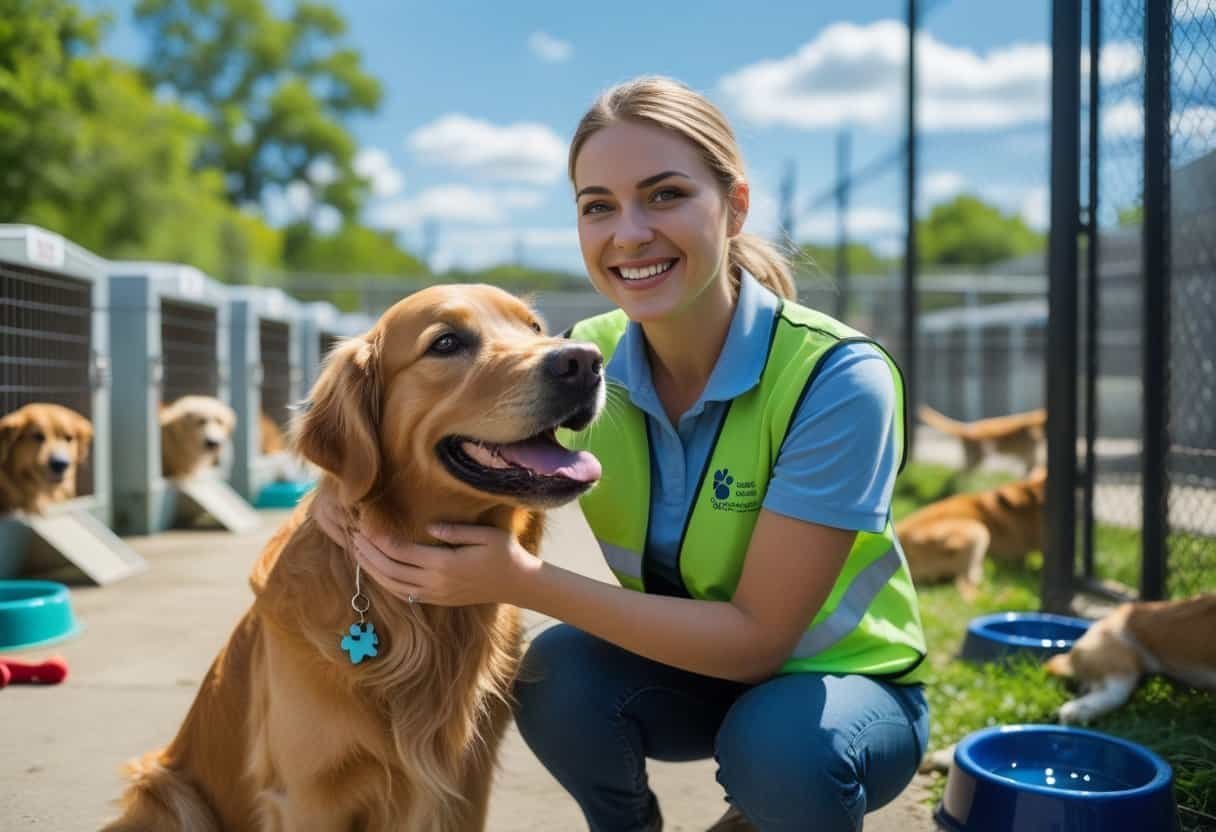
There are a bunch of ways to find dog volunteer gigs. Each one lets you match your skills and interests with groups that need help.
Local Listings And Online Directories
Community centers, bulletin boards, and libraries often post flyers or newsletters about dog volunteer spots. Checking these public boards keeps you in the loop about local shelters, rescue groups, and events.
Online directories make searching even easier. Some websites list up-to-date roles with shelters, animal hospitals, and charities.
National groups like Dogs Trust have simple portals for signing up. Many sites let you sort by location, interest, or schedule.
That saves time and shows you what fits best. Listings often include requirements, like minimum age or special skills, so you can pick what works.
Online applications are usually quick. Tip: Bookmark your favorite sites and check back often—new gigs pop up all the time.
Contacting Animal Welfare Groups
Reaching out directly to local animal welfare organizations is honestly one of the best ways to find available roles. Nonprofits like Canine Companions and RSPCA usually offer a bunch of volunteer opportunities.
You might see roles like dog walking, kennel cleaning, therapy dog programs, or fostering. Most organizations list ways to volunteer and how to sign up right on their websites.
If you want to stand out, try sending an email, calling, or even stopping by in person. That kind of personal contact shows you’re genuinely interested, which can help when roles get competitive.
Some animal groups run orientation sessions or training to help new volunteers settle in. If you’re curious about therapy dog work, event support, or fostering, just ask the staff about specific opportunities.
Staff can explain what they expect and what the schedule looks like. It’s always smart to ask questions and be proactive so you can find a role that fits your skills and your free time.
Frequently Asked Questions
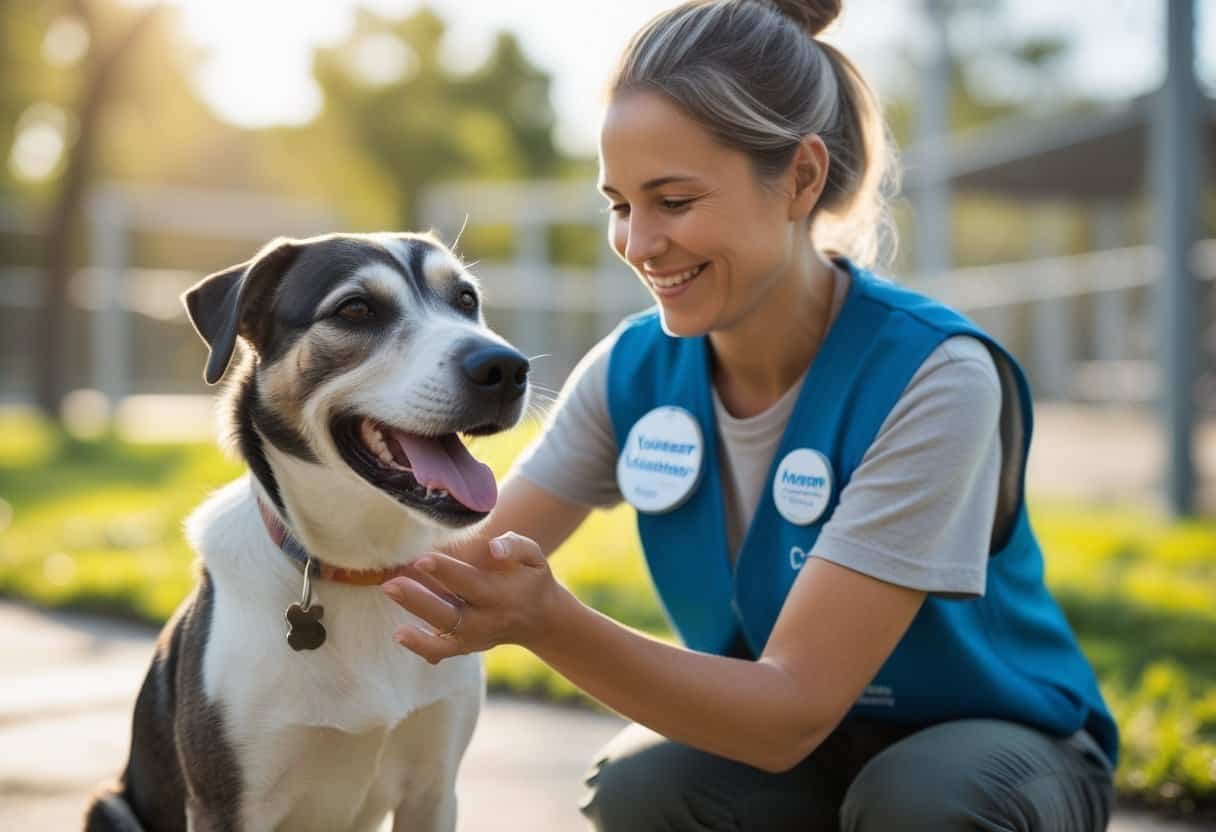
A lot of people want to help dogs but aren’t sure where to start. Each volunteer opportunity has its own steps and requirements, so it helps to know what you’re getting into.
How can I get involved with dog shelter volunteer work?
Most animal shelters ask new volunteers to fill out an application. Training comes before you work with the animals.
Volunteer roles might include walking dogs, cleaning, or helping out at adoption events. Some shelters also need help with office work.
What are the requirements to volunteer with service dogs?
If you want to volunteer with service dogs, you’ll often help raise and train them. Most groups look for people who can stick to training guidelines and commit to regular time with the dogs.
Even if you’ve never trained a dog, some organizations will guide you. You can read more about these programs at Can Do Canines FAQ.
Are there specific organizations dedicated to dog volunteer opportunities?
Definitely—there are plenty of groups with different types of dog-focused volunteer work. Albert’s Dog Lounge lets people help rescued dogs, and Patriot Service Dogs trains service dogs with help from volunteers.
It’s worth browsing organizations’ websites to find what matches your interests.
Can minors participate in animal shelter volunteer programs?
Some shelters let teens volunteer if they have a parent or guardian’s permission. There are usually age restrictions, depending on the job.
Tasks that involve direct animal contact might only be open to adults or older teens. Always check each group’s policies before applying.
What should I expect when volunteering at an animal shelter?
New volunteers usually start with an orientation to get familiar with the shelter and how things work. Typical tasks include feeding animals, walking dogs, cleaning kennels, or greeting visitors.
You can find more details about common tasks and training at The Milo Foundation volunteer FAQ.
How can my dog become involved in volunteer activities?
Some programs let well-behaved dogs visit hospitals, schools, or nursing homes with their owners. Dogs usually need to pass a test to show they’re calm and friendly.
You can reach out to local therapy dog programs to find out what they require. Every group seems to have its own steps, so it’s worth asking around before you start.
{ “@context”: “https://schema.org”, “@type”: “BlogPosting”, “headline”: “Volunteer with Poodle Rescues – Make a Difference Guide”, “url”: “https://poodlesforadoption.com/dog-volunteer/”, “datePublished”: “2026-03-22T06:45:06Z”, “dateModified”: “2026-03-22T06:45:06Z”, “author”: { “@type”: “Person”, “name”: “J.W.”, “url”: “https://poodlesforadoption.com/author/jwauthor/” }, “publisher”: { “@type”: “Organization”, “name”: “Poodles For Adoption”, “url”: “https://poodlesforadoption.com” } }