

The Husky Poodle mix, which poodle owners affectionately call the Husky Doodle, Siberpoo, or Poosky, is an adorable mix breed with the best of his parent breeds’ traits!
If you’re planning to get a Husky Doodle as one of your family pets, read on to learn more about this intelligent and affectionate breed.
About This Guide
- Real Experience: Written by poodle enthusiasts with years of hands-on experience caring for and training poodles.
- Expert Reviewed: Content verified by certified dog trainers and veterinary professionals.
- Fact-Checked: Information sourced from the AKC, veterinary journals, and breed specialists.
- Last Updated: November 2025
Husky Poodle Mix Breeds History
People bred certain Doodle breed dogs for specific purposes, such as the Labradoodles as service animals or Sheepadoodles as military dogs. That isn’t the case for the Husky Doodle, who people most likely bred as designer dogs.
There aren’t any documented accounts behind this mixed breed, and it’s most likely that the intention was to take the aesthetic appearance of the Siberian Husky and the Poodle’s hypoallergenic coat. Like most Poodle mixed breeds, breeders most likely created the Husky Doodle in the 1980s to 1990s.
How about the Husky Doodle’s parent breeds? While poodle owners are familiar with the Poodle history, which originated in Germany as a duck hunter and waterfowl retriever, the Husky has a similarly exciting account.
Contrary to popular belief, the Siberian Husky isn’t a wolf or wolf hybrid. Chukchi people, natives of Siberia, Russia, first bred the Siberian Husky for work and family. The breed came to the United States, particularly in Nome, Alaska, in 1909. The Husky worked as sled dogs and even competed in long-distance races.
Husky Poodle Mix Appearance
Since Huskydoodles are a relatively new breed, there aren’t many specific standards for their size, according to the AKC on Designer Dogs.
But because they are a mix between the Poodle and Siberian Husky, expect them to be medium-sized. However, a Huskydoodle can be smaller depending on the Poodle parent’s size, who can be a Standard, Mini, or Toy Poodle.
On average, Huskydoodles can weigh between 40-60 pounds and measure 12-25 inches tall.
As for their coat, the Huskydoodle can inherit either the distinctive coloring of their Siberian Husky parent breed or the hypoallergenic coat of the Poodle.
If they inherit the Siberian Husky’s straight coat, it can take on white, silver, or black colors. If they inherit the Poodle’s wavy coat, it can take on various white and brown colors. There’s no guarantee that a Huskydoodle will be hypoallergenic, as this depends on the coat they inherit.
Huskydoodle Temperament
Many people love the Husky Doodle because of his affection and loyalty. But their love and playful nature make them require a lot of attention and care. Compared to other Doodle breeds, they are more high-maintenance and similar to Poodles!
For example, the Husky Doodle needs a family who will stay home most of the time or have someone who does. If not, they tend to suffer from separation anxiety and boredom, which leads to poor and destructive behavior. They are not sedentary and will need the higher-than-usual amount of exercise and training regularly.
While a bit needy, they are very loyal to their family, with a protective nature that makes them excellent guard dogs. The Husky Poodle mix even pays special attention to children and other vulnerable family members.
That said, you don’t need to worry about biting or aggression. As long as you give your Husky Poodle mix proper exercise and socialize the dog while still a puppy, then your dog will be gentle towards other people and animals outside the family, according to the ASPCA Dog Care.
Besides that, socialized Huskydoodles are intelligent and easy to train with high activity levels, just like their parent breeds! However, they are better off for experienced dog owners because of their need for attention and daily exercise.
Husky Poodle Mix Health Issues
Huskydoodles have a relatively long 12-15 years lifespan, depending on their genetics and quality of care given. Unfortunately, they are still susceptible to the common health issues of their parent breeds. Being a mixed breed provides them genetic diversity, lowering the risks of developing inherited diseases.
It’s still important to watch out for these common genetic disorders, which can affect a Husky Poodle Mix:
- Gastric Dilation Volvulus
- Hip Dysplasia
- Patellar Luxation
- Legg-Calve Perthes Disease
- Elbow dysplasia
- Elbow displacement
- Allergic reaction or skin issues
- Joint issues
As long as you feed your Husky Poodle, Mix the proper care such as good food, give him physical exercise, and take him to the vet for routine checkups, you can lessen the risk of him succumbing from disease or injury. Ask the veterinarian for advice regarding the Husky Poodle mix’s diet, which varies based on his age, weight, and any special diet he must follow.
How to Care for a Husky Poodle Mix
The Husky Poodle mix has the highest energy levels among the different Poodle mixed breeds. Expect them to need a ton of exercise per day to stay happy and healthy because of their boundless energy!
That’s why the Husky Poodle mix is better off in homes with their backyard so they can run around and play. If you live in a small apartment, that’s no problem as well, provided that you keep your Husky Poodle mix stimulated with toys, indoor games and take your dog out for daily walks.
The Husky Poodle mix must get at least an hour of exercise with added playtime and proper training besides that. Mental stimulation is just as important, so games and training are a must!
When poodle owners talk about a training session, this hybrid breed is intelligent and has a slightly stubborn streak. When you’re not an experienced dog owner, training will be challenging. That’s why it’s crucial to begin obedience training and to house train as early as possible to set rules and boundaries, providing a level of discipline that lets them know you’re in charge. Also, they may have a short attention span, so keep the training process short but consistent, besides using positive reinforcement.
As for grooming sessions, you will need to brush your Husky Poodle’s coat daily, or at least 2-3 times a week. If he has the Poodle’s curly coat, use a wire brush to remove dead hair and prevent mats and tangles.
Bathe the Husky Poodle mix every 6-8 weeks, including regular clipping sessions to maintain a healthy coat length. Besides that, a Huskydoodle also requires regular nail care, ear cleaning, and teeth brushing. As you do this, you can inspect the dog’s body to spot any issues or abnormalities.
How Much is a Husky Poodle Mix?
If you’re planning to invest in a Huskydoodle, choose a reputable breeder. Backyard breeders are selling cheap Huskydoodle puppies in poor conditions, making them susceptible to many health conditions. It’s inhumane and a practice poodle owners should not support.
That said, Huskydoodles cost between $800 to $1,500.
So, is the Husky Poodle Mix the perfect dog for you? If you are an active family with at least one experienced owner, then yes! You can provide the Huskydoodle with a great home with all the love and attention he needs.
But if you are usually out of the house with no one to care for the dog, you may want another Doodle mix that is less demanding with your time. Huskydoodles can be slightly stubborn unless you delve into proper training early on!
Related reading: A Guide to the Terrier Poodle Mix
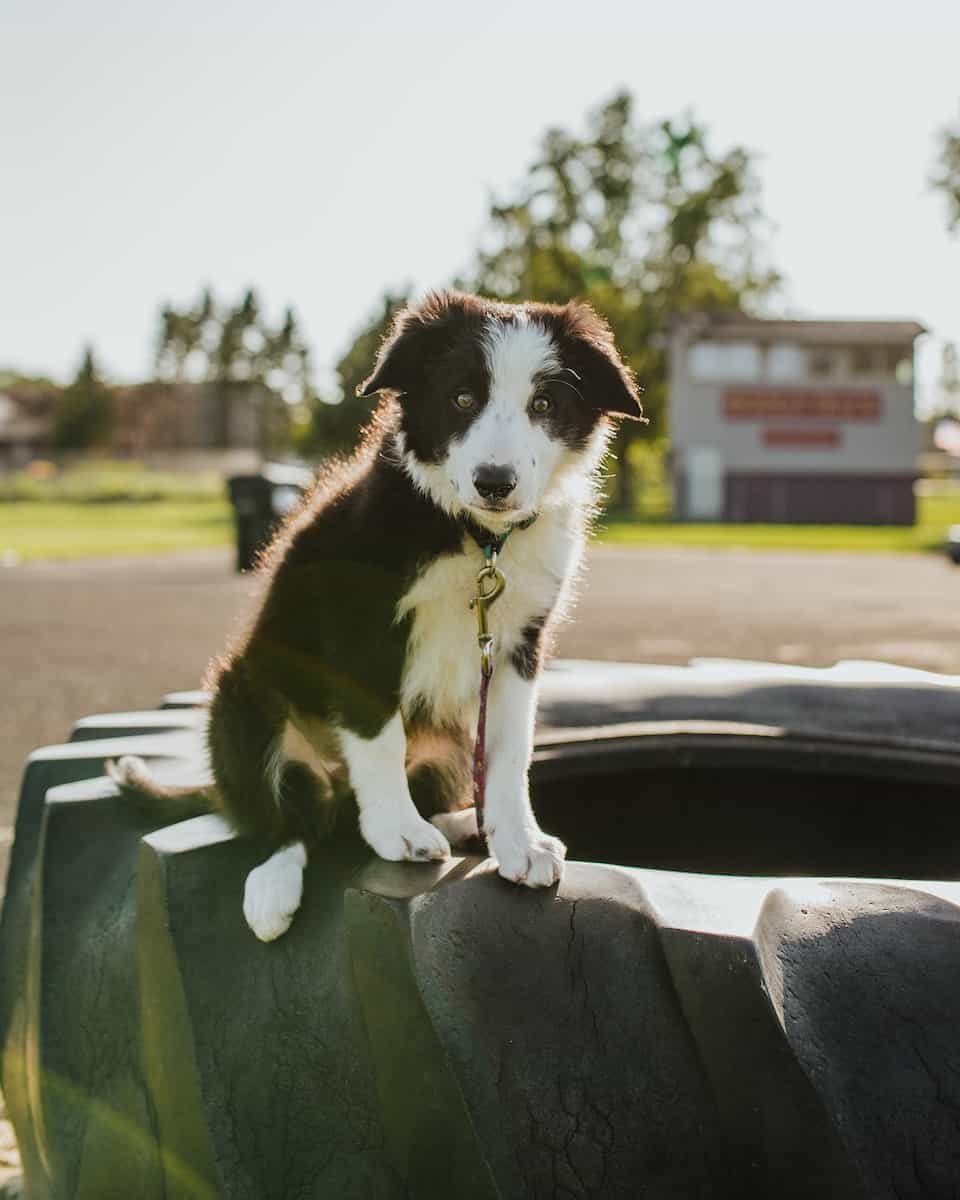
Huskydoodle Training: What to Expect
Training a Huskydoodle requires patience, consistency, and an understanding of how both parent breeds learn. The Poodle contributes exceptional trainability and an eagerness to please. The Siberian Husky brings intelligence but also a streak of independence and a tendency to test boundaries — particularly in adolescence.
The most effective approach is positive reinforcement from an early age. Short training sessions of 10–15 minutes, repeated two or three times daily, work far better than long sessions that allow attention to drift. High-value treats and enthusiastic verbal praise are the strongest motivators for this mix.
Commands to prioritize first:
- Recall (“come”) — critical for a breed with Husky-level prey drive; train this relentlessly before allowing off-leash time
- Leave it — Huskydoodles are curious and mouthy; this command prevents dangerous encounters
- Sit and stay — foundation for impulse control, especially important around strangers and other dogs
- Loose-leash walking — Huskies pull instinctively; early leash training prevents this becoming a permanent habit
Socialization is equally important. Expose Huskydoodle puppies to a wide variety of people, animals, environments, and sounds during the socialization window (8–16 weeks). Well-socialized Huskydoodles are confident and adaptable; undersocialized ones can develop anxiety or reactive behavior that is much harder to address in adulthood.
Huskydoodle Exercise Requirements
Huskydoodles are high-energy dogs that need substantial daily exercise — at minimum 60–90 minutes of vigorous activity. The Siberian Husky parent was bred for endurance sled work over long distances in extreme conditions. Even diluted by Poodle genetics, this working dog drive remains strong and must be channeled appropriately.
| Activity Type | Suitable for Huskydoodle? | Notes |
|---|---|---|
| Running / jogging | Excellent | Ideal cardio outlet; can cover 5–10 miles daily |
| Swimming | Excellent | Inherited from Poodle parent; great low-impact exercise |
| Hiking | Excellent | Stimulates mind and body simultaneously |
| Fetch / frisbee | Good | Best in a securely fenced area given prey drive |
| Agility training | Good | Channels intelligence and energy; improves focus |
| Apartment walking only | Insufficient | Will lead to destructive behavior and anxiety |
Mental stimulation is as important as physical exercise. Puzzle feeders, scent games, obedience training sessions, and interactive toys all help drain the cognitive energy that makes under-stimulated Huskydoodles destructive. A tired Huskydoodle is a well-behaved Huskydoodle.
Huskydoodle Grooming Guide
Grooming needs vary significantly by coat type, and Huskydoodles can inherit either the Husky’s thick double coat or the Poodle’s curly single coat — or, most commonly, something in between.
Dogs with wavier, curlier coats (more Poodle-like) need brushing 3–4 times per week to prevent matting and professional grooming every 8–10 weeks. Dogs with straighter, denser coats (more Husky-like) shed heavily and require daily brushing, especially during seasonal blowouts in spring and autumn when shedding intensifies dramatically.
Grooming essentials for Huskydoodle owners:
- Slicker brush and wide-toothed metal comb for regular detangling
- Deshedding tool (Furminator-style) for dogs that inherit more Husky coat density
- Dog-safe ear cleaner — both parent breeds are prone to ear infections; clean weekly
- Nail clippers or grinder — high-activity dogs wear nails down naturally, but monthly checks are still needed
- Enzymatic toothpaste — dental disease is prevalent in medium to large breeds; brush teeth 2–3 times per week
Is a Huskydoodle the Right Dog for You?
Huskydoodles are rewarding companions for the right owner but genuinely demanding for those who are unprepared. Before committing, honestly assess whether the lifestyle requirements align with your current situation.
| Factor | Good Fit | Not Ideal |
|---|---|---|
| Living situation | House with a yard, access to open spaces | Small apartment with no outdoor space |
| Activity level | Active owner who runs, hikes, or works out daily | Sedentary lifestyle or long work hours away from home |
| Experience level | Dog owners with prior experience training medium/large breeds | First-time dog owners without a commitment to consistent training |
| Alone time | Household where someone is home most of the day | Owners who work 8+ hours daily without a dog sitter or walker |
| Allergy concerns | Families hoping for reduced shedding (not guaranteed) | Severe allergy sufferers requiring a confirmed hypoallergenic breed |
For active families, outdoor enthusiasts, and experienced dog owners who can meet their considerable needs, Huskydoodles are affectionate, playful, and deeply loyal companions. Those willing to invest in proper training, daily exercise, and social enrichment will find this hybrid one of the most rewarding mixed breeds available.