Ensuring Your Puppy Eats More
Puppies sometimes just don’t eat enough for proper growth. It’s important to notice the signs, know how to increase food safely, and check how your pup looks and feels.
Recognizing When to Increase Food Intake
Growth spurts, extra playtime, or a puppy acting hungrier than usual might mean it’s time for more food. If you see ribs, notice low energy, or your puppy isn’t gaining weight, those are warning signs.
A feeding schedule helps you keep track. If your puppy finishes every meal fast and still looks for more, maybe it’s time for bigger portions.
Watch for new behaviors, like begging or restlessness at mealtime. Slow growth or a dull coat can also signal a need for more food.
You can read up on how much food to give your puppy to help you make changes as they grow.
Safely Adjusting Feeding Portions
Check the puppy food label for feeding guidelines before making changes. Don’t add too much at once—try bumping meals up by about 10% and see how your puppy reacts.
Offering more frequent, smaller meals can help puppies handle extra calories. Use a scale or measuring cup to keep portions right.
Always stick with puppy food, since it’s made just for their needs. If you’re not sure about amounts, look up puppy feeding tips or ask your vet.
Monitoring Body Condition for Growth
Check your puppy’s body regularly. Look from above and from the side; you want to see a waist, but not sharp ribs.
Feel your puppy—firm and rounded is good, not skinny or bloated. Here’s a simple table to help:
| Appearance | Condition | Action Needed |
|---|---|---|
| Ribs visible | Underweight | Increase food |
| Ribs hard to feel | Overweight | Reduce intake |
| Waist visible | Ideal | Maintain |
Weigh your puppy and use growth charts to spot changes early. Knowing how to avoid diet mistakes helps your puppy stay on track.
Choosing the Best Puppy Food
<iframe style="aspect-ratio: 16 / 9Addressing Underweight Puppies
If your puppy seems underweight, it’s important to act quickly. Figuring out why they’re not gaining weight and reaching out to a vet can make a real difference.
Common Causes of Poor Weight Gain
A few things can cause a puppy to struggle with weight gain.
- Parasites: Intestinal worms steal nutrients, making it tough for puppies to grow.
- Low-quality food: Some foods just don’t cut it. Puppies need diets with enough protein, fat, and calories for healthy growth.
- Illness: Infections, digestive problems, or issues from birth can slow weight gain. Puppies with ongoing diarrhea or vomiting burn through calories way too fast.
- Stress: Anxiety, loneliness, or big changes at home can zap a puppy’s appetite.
Watch for ribs showing, little muscle, or slow growth. If you’ve already tried switching food or feeding more and nothing’s changing, you’ll probably need some extra help. Here’s a guide on helping your underweight puppy gain weight.
Working With Your Veterinarian
A vet will check your puppy with a physical exam and might run tests for parasites or infections. Stool checks or blood tests can uncover hidden problems.
Your vet can recommend the right food and how much to feed for your puppy’s age and health. Sometimes they’ll set up a special feeding plan with more calories and protein.
If your puppy needs medicine for worms or other illnesses, your vet will prescribe it. They’ll also share advice about feeding schedules, safe supplements, and warning signs to watch for, according to the American Kennel Club.
Check out this practical resource for underweight pups for more expert tips.
Puppy Growth and Development
Puppies change fast during their first year. Their size, strength, and even behavior seem to shift overnight sometimes.
Stages of Physical Maturity
Newborn puppies can’t see or hear, so they rely completely on their mom. By the second week, their eyes and ears open, letting them explore a bit more.
Between three and eight weeks, they start walking, playing, and learning from their littermates. This is when they pick up the basics.
At eight to twelve weeks, puppies get curious and playful. They’re ready for gentle training and new experiences.
By four to six months, they lose baby teeth and get their adult set, and their bodies start to fill out. Small breeds usually mature by a year, while big breeds might take up to two years to fully grow. Want more details? Here’s a good read on puppy development stages.
Expected Weight Changes Over Time
Puppies grow fastest in the first six months. Their weight can double or even triple in just a few weeks.
Tiny breeds might weigh only a few ounces at birth, but big breeds can be over a pound. Weekly weigh-ins help spot healthy progress.
From two to six months, growth keeps going strong. Small breeds reach half their adult weight by three months, but big breeds take a little longer—closer to five months.
After six months, growth slows but doesn’t stop until maturity. Check out a puppy growth chart to keep tabs on your pup’s progress.
Monitoring Energy and Activity Levels
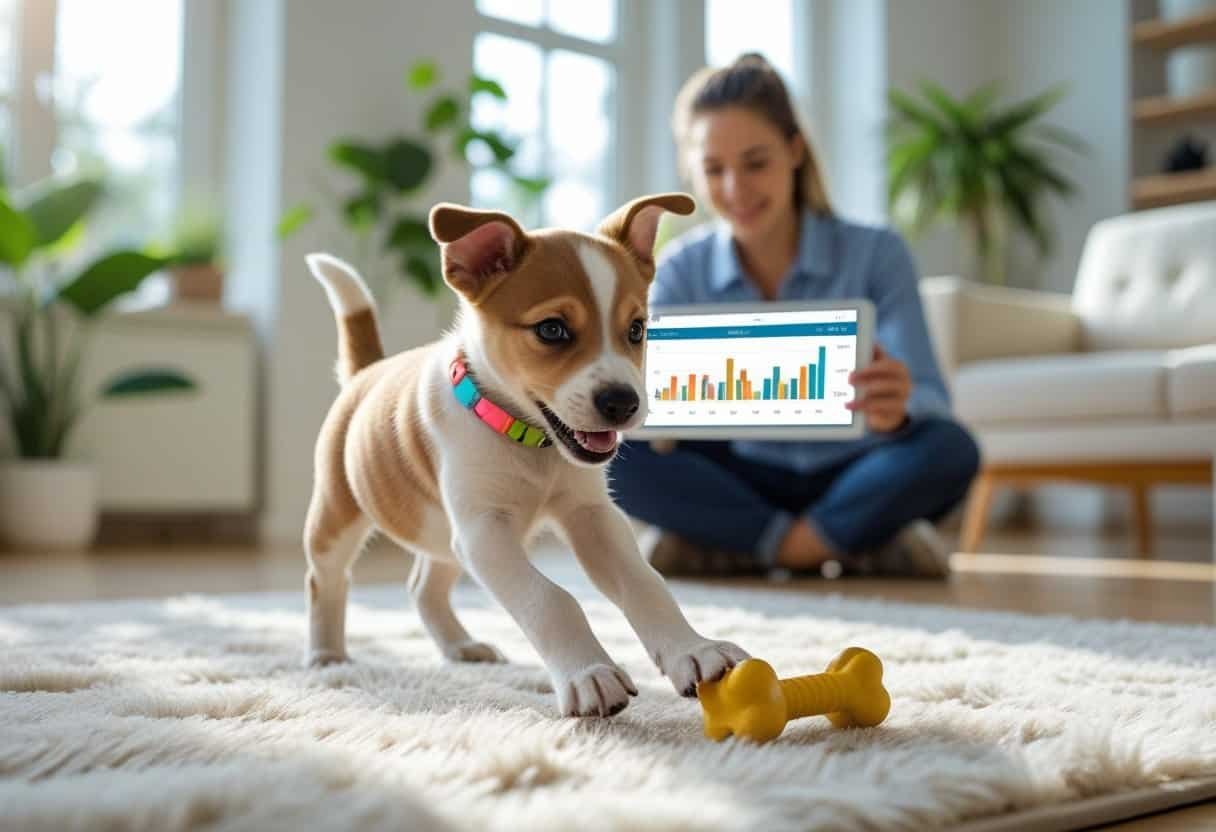
Keeping an eye on how energetic your puppy is can tell you a lot about their health. If you notice big changes in activity or tiredness, it might be time to look closer.
Identifying Signs of Lethargy
A puppy who suddenly seems tired could be dealing with something serious. Maybe they’re sleeping way more, ignoring toys, or not excited for meals.
Other red flags:
- Sluggish on walks or can’t keep up
- Less interested in playing with people or pets
- Lying down during activities instead of exploring (more on mental engagement here)
Sure, puppies sleep a lot. But if you spot strange behaviors, like constant tiredness, pale gums, or breathing trouble, call your vet. Here’s a guide on puppy energy changes by age if you want to dig deeper.
Balancing Exercise With Nutrition
Exercise and food work together for growing puppies. Not enough activity can make them restless or chubby (signs your poodle needs a diet). But too much play and not enough food? That leads to weakness.
Here’s a quick table to help balance things:
| Puppy Age | Activity Needed | Feeding Tips |
|---|---|---|
| 8-12 weeks | Short play sessions | 4 small meals daily |
| 3-6 months | Several short walks | 3 meals daily |
| 6+ months | More vigorous activity | 2-3 meals, watch portion sizes |
High-protein diets fuel growth and play. Adjust meals and exercise as your puppy gets bigger. Need more details? Here’s a guide on matching energy needs to age and routine.
Health Considerations for Feeding More
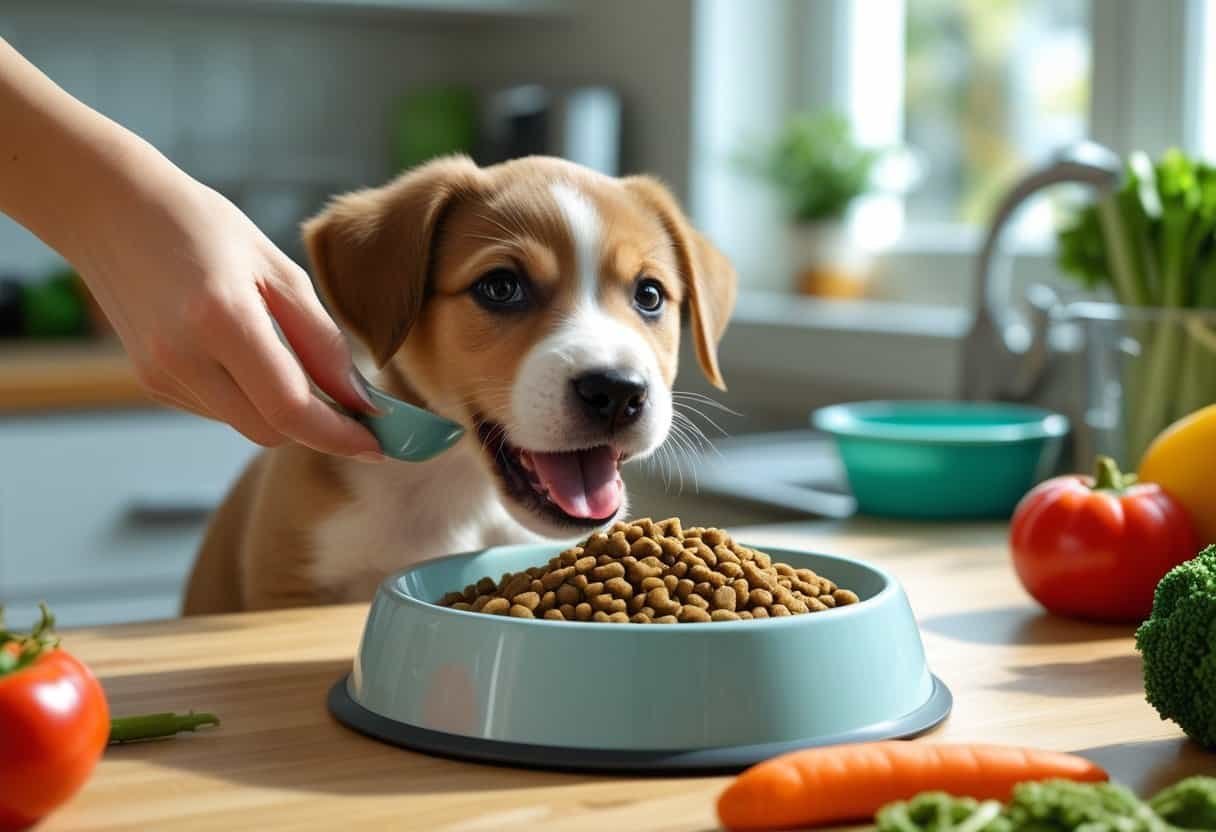
Feeding extra can help a puppy grow, but it’s easy to go overboard. Portion control and watching for health changes are key.
Preventing Overfeeding and Obesity
Puppies need enough food, but too much can cause trouble. Overfeeding leads to weight gain, which brings joint pain, diabetes, and heart issues.
Check the feeding guidelines on your puppy food bag—they’re usually based on age and weight. Try feeding smaller amounts several times a day instead of dumping it all in the bowl at once.
You should be able to feel your puppy’s ribs, but not see them. If they’re putting on weight too fast, shrink the portions and chat with your vet. Here’s a puppy feeding guide by weight and size.
Recognizing Signs of Illness
Feeding more might cause digestive upsets or reveal hidden health problems. Watch for vomiting, diarrhea, sudden weight changes, or low energy.
If your puppy suddenly stops eating or seems uncomfortable after meals, something could be wrong. Keep an eye on stool and eating habits.
Big changes could mean food intolerance, allergies, or other problems that need a vet visit. Also look for things like coughing, limping, or skin issues. For more, check out this puppy feeding schedule guide.
Training and Socialization During Feeding
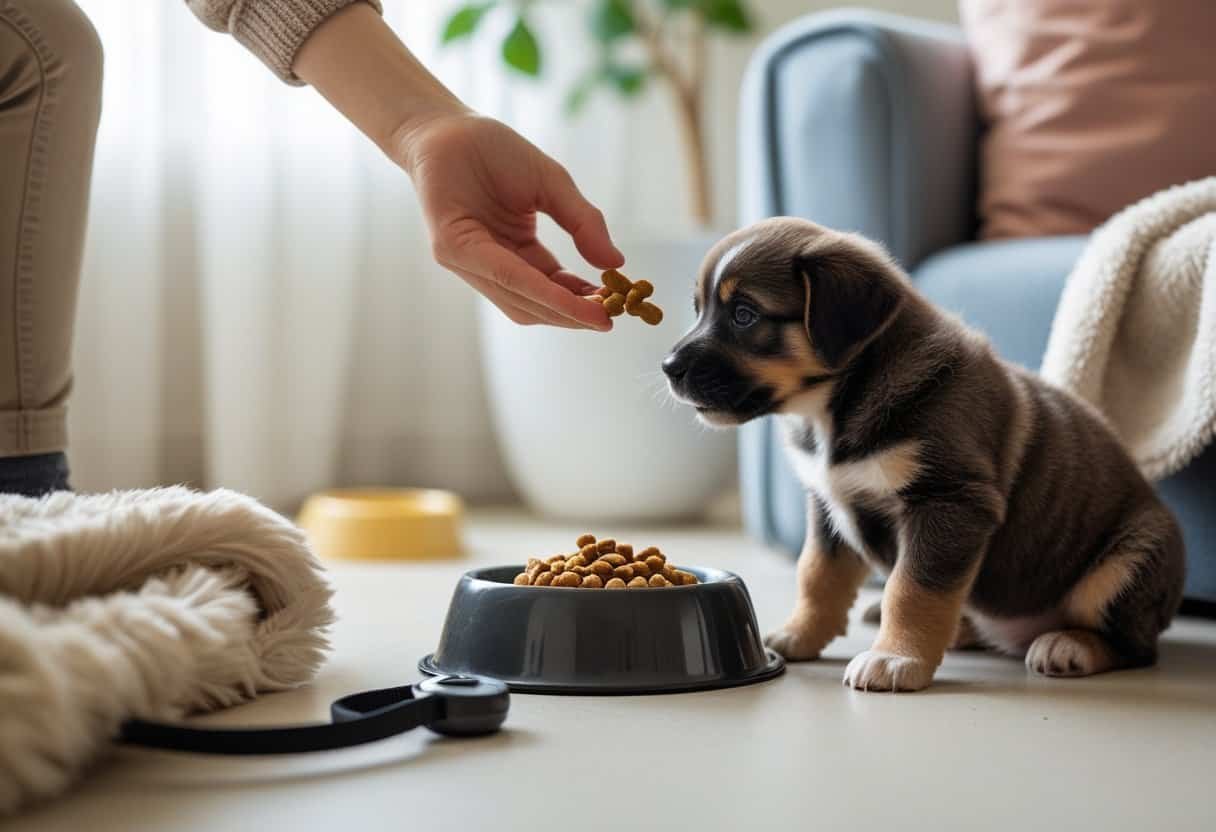
Feeding time is a great chance to teach your puppy manners and help them get comfy around people. Setting up good habits at mealtime makes your puppy feel secure.
Building Positive Mealtime Behaviors
Structure at mealtime teaches puppies patience. Have your puppy sit and wait before you give the go-ahead to eat.
This routine builds impulse control and soon becomes second nature. Hand-feeding is another trick—offering food from your hand helps your puppy get used to touch and handling.
It’s a handy way to sneak in obedience training. Ask for a “sit,” “down,” or “stay” before each bite.
Here’s a sample routine:
| Step | Action |
|---|---|
| 1. Preparation | Puppy sits and waits |
| 2. Permission | Release cue to eat |
| 3. Hand Feeding | Deliver kibble as a reward |
| 4. Practice Commands | Add 1-2 basic cues |
These habits keep mealtime calm and help you bond with your puppy. For more, see how hand feeding supports training and socialization.
Integrating Social Experiences
Mealtime can introduce puppies to new people, sights, and sounds in a safe way. Try feeding in different rooms or let friends quietly watch during meals.
Gently adding new sounds or movement during feeding helps your puppy build confidence. Maybe leave the TV on or play quiet music—they’ll learn to stay calm with distractions.
Let family members take turns feeding to build trust with different people. Feeding near other pets (but at a distance) and rewarding calm behavior helps puppies learn to share space.
Careful socialization around food prevents resource guarding. For a guide on using mealtime for puppy socialization, check out these training resources.
Transitioning to Adult Food
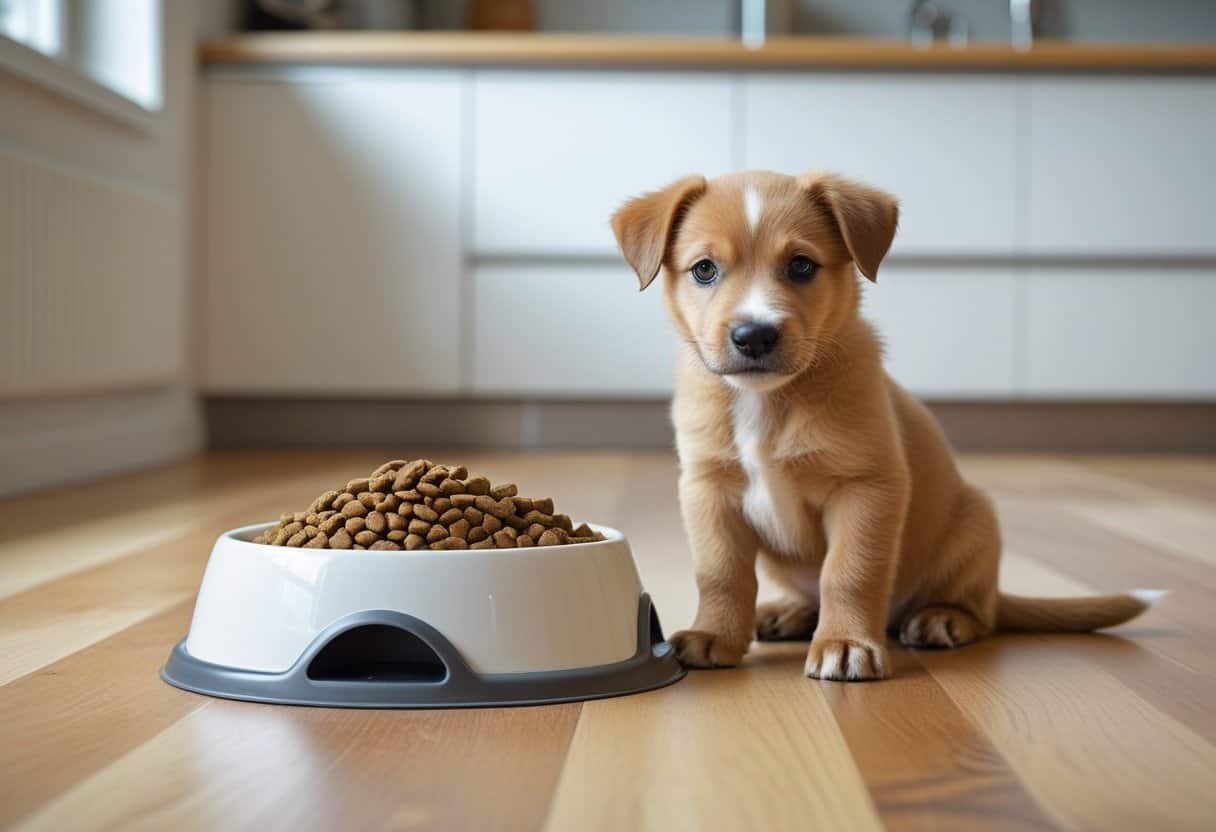
Switching from puppy food to adult food is a big deal for your dog’s health. Getting the timing right helps avoid stomach upsets and supports steady growth.
When to Switch Based on Breed Size
Breed size really matters here. Small breeds usually switch to adult food around 9 to 12 months.
Medium breeds are ready between 12 and 14 months. Large and giant breeds? They might need puppy food until 18 to 24 months.
Table: Typical Switch Times by Breed Size
| Breed Size | Age to Switch |
|---|---|
| Small | 9-12 months |
| Medium | 12-14 months |
| Large/Giant | 18-24 months |
Ask your vet for advice, since some dogs grow at their own pace. Switching too soon can cause nutrition problems—puppy food has more protein, fat, and calories than adult food.
Step-by-Step Transition Methods
You shouldn’t rush the switch from puppy food to adult food. If you go too fast, your dog might end up with an upset stomach or diarrhea.
Most experts suggest spreading the transition out over about a week. Here’s a method that works for many people:
- Days 1-2: Mix 75% puppy food with 25% adult food
- Days 3-4: Mix 50% puppy food with 50% adult food
- Days 5-6: Mix 25% puppy food with 75% adult food
- Day 7: Serve only adult dog food
If your dog seems to have a sensitive stomach, just slow down and let each step last a bit longer. Watch for vomiting, loose stool, or if your dog refuses to eat.
If any of these problems stick around for more than two days, it’s time to call your vet. Mixing the old and new foods gives your dog’s gut a better shot at adjusting.
You can find more details at this step-by-step guide to transitioning dog food.
Frequently Asked Questions

Puppies grow through distinct stages that each need a different kind of care and attention. Their behavior, eating habits, and the way they interact with you or other pets will change as they develop.
What are the typical developmental milestones for puppies by month?
Newborn puppies can’t see or hear. Their senses start opening up in the first couple of weeks.
By three to four weeks, they’re up on their feet, walking and playing. Around two months old, most puppies are ready for new homes and can start basic training.
At six months, adult teeth come in and puppies start acting a little more independent. There’s a handy breakdown of growth stages at Dog Breeds’ new puppy questions guide.
How does a puppy’s behavior change as it matures?
Young puppies sleep most of the day and stick close to their mom and littermates. As they get older, they start exploring, looking for attention, and figuring out boundaries.
Adolescence can bring a burst of energy and, honestly, a bit of stubbornness. By one year, many puppies settle down, though some breeds take longer to mature mentally.
What should I expect during the first year of raising a puppy?
During the first year, your puppy will grow fast, both physically and mentally. You’ll need to take them to the vet a few times for vaccines and check-ups.
Training and socialization are big deals during this stage. Chewing, mouthing, and other challenges pop up, but regular play and consistent training really help. You can read more at Vetstreet’s answers to puppy owner questions.
How do I interpret my puppy’s behavioral cues?
A wagging tail usually means excitement. If the tail is tucked, your puppy might feel scared or anxious.
Barking and whining can mean they want attention or something’s bothering them. Play bows are a classic invite to play, while growling or showing teeth is a warning to back off.
Watching these signals helps you get what your puppy needs or feels.
When do puppies typically start weaning, and how should it be managed?
Weaning usually kicks off at three to four weeks old. Puppies go from their mother’s milk to solid food in small steps.
Start with moistened puppy food, then slowly make it firmer as they get used to eating. By eight weeks, most puppies eat solid food almost exclusively.
If you’re curious about weaning, check out Enlightio’s guide to new puppies.
What are the stages of puppy development and associated nursing needs?
The neonatal stage lasts for the first two weeks. During this time, puppies nurse frequently and rely completely on their mother.
In the transitional stage, which runs from two to four weeks, puppies start to open their eyes. They begin crawling and sometimes try tiny bits of solid food.
Socialization happens between three and twelve weeks. Here, regular feeding goes hand-in-hand with gentle play and a bit of early training.
After this, puppies stop nursing. They need solid food that fits their age to help them grow up healthy.